Blocked Shower Drain? How to Unblock It, and When It Is the Main Drain
Most blocked shower drains are hair and soap within a hand's length of the plughole. How to clear that yourself, what to avoid, and the signs that standing water in the tray is really a blocked drain further down.
To unblock a shower drain, take the cover off the waste, pull out the hair and soap caught underneath it, and run the hot tap to check it flows. That fixes most blocked showers in ten minutes without any tools. If the water still will not go down, a plunger is the next step. If water starts rising in the shower tray when someone flushes a toilet or runs a sink, stop: the blockage is in the drain below the house, not in the shower, and it needs a different fix.
Start with the waste cover: that is where most blockages are
Nearly every blocked shower is hair bound together with soap and conditioner, sitting in the trap directly under the plughole. You can reach it with a gloved hand once the cover is off.
How you get in depends on the waste you have:
- Domed or flat cover on a shower tray. Most lift off or unscrew anticlockwise. Underneath there is often a removable hair catcher or a plastic dip tube that pulls straight up. Lift it out and clean it over a bin, not the toilet.
- Low-profile trap on a stone or acrylic tray. The cover usually has a central screw. Once it is out, the insert lifts free and gives access to the trap itself.
- Wet room or linear drain. The grate lifts out, sometimes with a small hook or suction lifter. There is a removable hair tray or trap insert beneath it, and it tends to collect more than a tray waste because the whole floor drains into it.
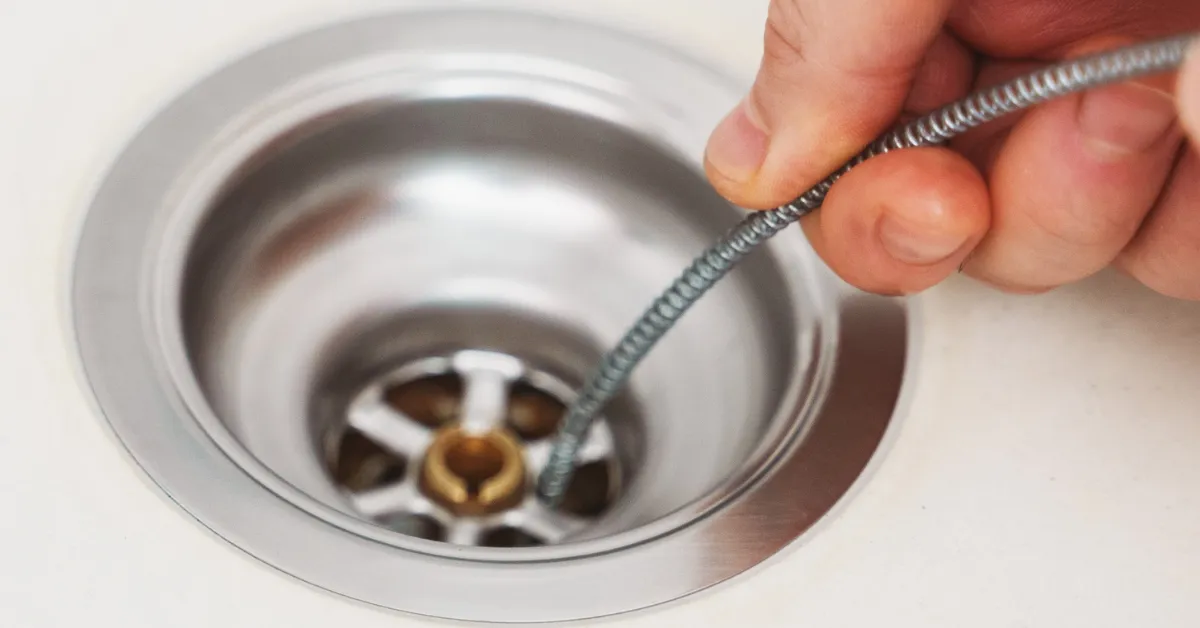
A plastic drain-clearing strip with barbs along its edge, sold for a few pounds in hardware shops, reaches a little further into the pipe than fingers can. Pull slowly so the clump comes out whole. When the trap is clear, refit the insert properly: a dip tube left out or seated loosely lets drain smells into the bathroom.
If it is still slow: plunge it, and skip the chemicals
A small cup plunger clears most of what the hand cannot reach, as long as there is a seal. Run a couple of centimetres of water into the tray so the cup is covered, press it over the waste and work it firmly ten or fifteen times.
If the shower is over a bath, hold a wet cloth tightly over the bath's overflow while you plunge. Otherwise the pressure escapes through the overflow instead of pushing the blockage along. Hot water from the tap helps soften soap build-up between attempts.
Two things are worth avoiding. Boiling water from a kettle can soften plastic waste pipes and craze acrylic trays, and hot tap water does the same job safely. Chemical unblockers rarely dissolve a hair plug, and they leave caustic water standing in the tray for the next person to deal with. Our guide to whether boiling water or drain unblocker actually works goes through what is and is not worth pouring down.
Standing water that will not move: what it tells you
If the shower is the only fitting that is slow, the blockage is in its trap or the short waste pipe behind it. If other fittings are slow too, or the tray fills from below, the problem is further down the system.
A simple test takes a minute. Run the basin tap for ten seconds, then flush the toilet, and watch the shower waste each time. If dirty water bubbles up into the tray, the shower and the other fittings share a pipe that is blocked below them. On a ground floor, a shower tray is often the lowest opening on that branch, so it is where a blocked drain shows first.
Water that smells of sewage or carries toilet paper into the tray is not a shower blockage at all. Stop using every tap and toilet in the house and read our guide to sewage coming up through a drain or toilet before doing anything else.
A bath that will not drain works the same way
A slow bath is usually hair and soap in the pop-up or plug-and-chain waste, or in the trap under the bath. The same steps apply, with one difference: the overflow has to be sealed for a plunger to work.
Pop-up wastes normally unscrew from the top, or the cap pulls off to expose a spindle you can lift out and clean. If the trap itself is blocked, it sits behind the bath panel, which on most baths is held by clips or a few screws along the top edge. Put a bowl and towels under the trap before you undo it, because it will be full of water.
Is a blocked shower an emergency?
Usually not. A shower that drains slowly or holds a few centimetres of water can wait until the morning, especially if there is a bath, a second bathroom or a basin you can use.
It becomes urgent in three situations: dirty water is coming up through the tray from below; water is escaping around the tray and showing on the ceiling of the room or flat underneath; or the blockage is part of a wider problem where the toilet is also backing up and it is the only one in the property. The two-minute check in is a blocked drain an emergency is the same one we run on the phone before sending anyone out at night.
If the answer is that it can wait, we will say so. The same clearance costs less in the 7am to 5pm band than it does after midnight, and a hair blockage in a shower trap is rarely worth a night rate.
Plumber, drainage engineer, or neither?
A blockage in the trap or the first metre or two of waste pipe is a job for you or a plumber. A drainage engineer is the right call when the problem is in the soil stack or the underground pipe that several fittings share.
If the tray drains once the hair is out, you do not need anyone. If you have cleared the trap, plunged it properly and it is still holding water, but nothing else in the house is affected, the waste pipe running under the floor to the stack is the likely spot and either trade can help. If the toilet, bath and basins are all misbehaving at once, it is a drain problem. Our guide on whether a blockage needs a plumber or a drainage engineer explains where one trade stops and the other starts.
Stopping it coming back
Shower blockages return because hair keeps arriving. A hair catcher that sits in or over the waste is the cheapest fix, and emptying it after each wash stops the clump reaching the trap.
Lift the cover and clean the trap every month or two in a busy household, rather than waiting for water to pool. Heavy conditioners and oil-based body washes coat the pipe and give hair something to stick to, so a kettle of hand-hot water down the waste once a week helps. If the same shower blocks every few weeks even with a hair catcher, the waste pipe may have too little fall or a sag where water sits, and that is worth a plumber's look on a normal working day.
Frequently asked questions
What is the fastest way to unblock a shower drain?
Take the cover off the waste and pull out the hair caught in the trap or hair catcher with a gloved hand or a plastic drain-clearing strip. That clears most shower blockages in a few minutes. If it is still slow, use a small cup plunger with a little water in the tray to make a seal.
Why is water coming up through my shower drain?
Water rising into the tray when you flush a toilet or run a sink means the shower shares a pipe with those fittings and that pipe is blocked below them. It is not a shower blockage. Stop using water in the house and get the drain cleared, because the next thing to come up can be sewage.
Can I pour boiling water down a blocked shower drain?
It is better not to. Water straight from the kettle can soften plastic waste pipes and damage acrylic trays. Hot water from the tap softens soap build-up just as well without the risk. Neither will shift a hair blockage on its own, so remove the hair first.