Rats Coming Up From the Drain: What It Means and What to Do
Rats in a house, under the floor or in a toilet pan usually come from the sewer through a defect in the drains. Poison deals with the rats you have; finding and closing the gap stops the next ones. Here is how that works and whose job it is.
If rats are coming up from the drain, into a toilet pan or under the floors, there is almost certainly a gap in the drainage somewhere between the sewer and your house. Sewer rats travel along pipes, and they get into buildings through broken joints, open or disused pipes and damaged chambers. Pest control deals with the rats already inside. A drainage engineer finds and closes the way in. Most infestations that keep coming back need both.
A rat in the toilet: what to do right now
Close the lid, put something heavy on it, and keep people and pets out of the room. Then flush from outside the room if you can, or leave it closed and call for help. A rat in a toilet pan has come up the soil pipe and will usually try to go back the way it came.
- Do not try to catch or hit it. Cornered rats bite, and the water in the pan is contaminated.
- Weigh the lid down. Rats can push a lid up. A few heavy books or a full bucket on top keeps it closed.
- Check other ground-floor openings. Shower traps, floor gullies and uncovered waste pipes can be used the same way.
- Clean with disinfectant afterwards and wear gloves. Rat urine can carry Weil's disease (leptospirosis).
One rat in a toilet is not always a sign of a defect in your own drains; occasionally they come up an intact soil pipe. More than one sighting, or rats elsewhere in the house, points firmly at a broken or open drain.
How rats get from the sewer into a house
Through any gap big enough to fit through, and rats need very little. The common routes in older London houses are defects in the underground drain rather than holes in the walls.
- Displaced or open joints. Clay drains laid in short lengths move with the ground over time. A joint that has opened by a few centimetres lets rats out of the pipe and into the soil, where they burrow under floors and patios.
- Cracked or collapsed sections. A broken pipe gives direct access to the surrounding ground. The same defect often causes slow drainage and, eventually, holes opening over the drain run.
- Disused pipes left open. When a kitchen, bathroom or extension is rebuilt, old branch connections are sometimes left uncapped under the floor. This is one of the most common causes of rats under suspended timber floors.
- Damaged inspection chambers. Missing rodding-eye caps, broken benching, or a chamber cover that does not seat properly all give a way out of the drain.
- Open gullies and loose soil pipes. An external gully without a grid, or a soil stack that has pulled away from its connection at ground level, is an easy route in.
Pest control or drainage engineer?
Usually both, in that order of urgency. A pest controller reduces the number of rats in the property. A drainage engineer finds how they are getting in, so the problem does not return once the bait runs out.
Signs that point at the drains rather than a gap in the brickwork: rats appearing in a toilet or near a gully, burrows along the line between two manholes, droppings or noise under ground-floor floors with no obvious entry point outside, and a drain that also blocks or smells. If a pest controller has treated the property more than once and the rats keep coming back, the entry point is very likely below ground.
How the entry point is found
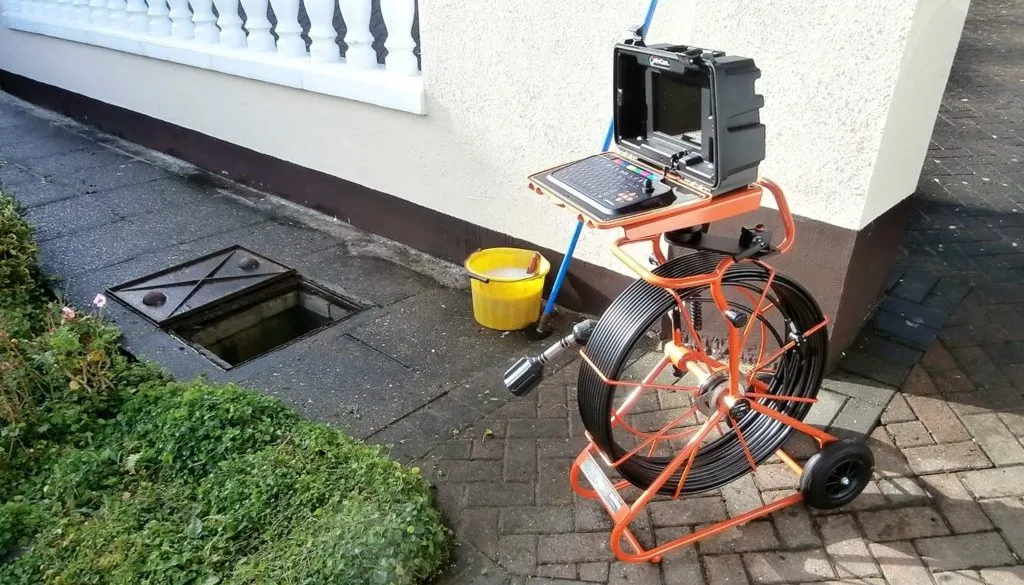
A camera survey of the drains is the standard way to find it. The engineer passes a camera through the drain runs from the inspection chambers and records every defect, including open joints, breaks and old connections that should not be there.
A CCTV drain survey shows the location and depth of each defect, which is what you need to decide how to fix it. Where a camera cannot identify an open pipe, for example a disused branch under a floor, a smoke test can be used: harmless smoke is pushed into the drain, and wherever it comes out is where the rats are getting out.
If rats are actively coming into living areas, this is worth doing promptly. The longer a colony has access, the more burrowing and gnawing there is to deal with.
How it is fixed
The fix depends on what the camera finds. Most rat entry points are closed by repairing the pipe, capping a redundant connection, or fitting a one-way barrier in the drain.
- Cap redundant pipes. Disused connections found by the survey are sealed off. This is often the simplest and cheapest fix.
- Repair or reline the damaged section. Open joints and cracks can often be sealed from inside the pipe without digging. Where the pipe has collapsed, a section is excavated and replaced. Our page on drain repair and excavation explains when digging is needed.
- Fit a rat barrier. A one-way flap fitted in the drain, usually at the last inspection chamber before the sewer, lets waste out and stops rats coming back up the pipe.
- Repair the chamber. Replace missing caps, rebuild broken benching and reseat the cover.
Each of these is quoted after the survey, with your agreement, before any work starts.
Who pays for rats in the drains?
If the defect is in a drain that serves only your property and sits within your boundary, the repair is yours to pay for, or your landlord's if you rent. If it is in the public sewer or a shared drain outside your boundary, the water company is responsible for repairing it.
Pest control treatment is separate. Some London councils offer a rat treatment service for residents, which may be free or charged depending on the borough. Buildings insurance sometimes covers the drain repair if the damage is accidental, so check your policy before work starts and keep the survey footage for any claim.
Frequently asked questions
Can rats really come up through a toilet?
Yes. Rats swim well and can travel up a soil pipe from the sewer into the toilet pan. It is uncommon, but when it happens more than once, or rats are also seen elsewhere in the house, it usually means there is a defect or an open pipe in the drainage that gives them easy access.
Will poison alone get rid of rats coming from the drains?
It will reduce the rats already in the property, but it will not stop new ones arriving from the sewer if the way in is still open. If a property has been treated more than once and the rats return, the drains should be surveyed to find and close the entry point.
Is a rat problem from the drains an emergency?
A single sighting is not usually an emergency, but rats inside living areas, in a kitchen, or appearing through a toilet should be dealt with promptly. Close off the room, weigh down the toilet lid, call a pest controller, and book a drain survey to find the entry point rather than waiting for it to get worse.