Hole in the Garden Near a Drain: Collapsed Drain or Sinkhole?
Most holes that open up in London gardens and driveways sit directly over a drain run, and most are caused by soil washing into a cracked or displaced pipe. Here is how to tell a drain collapse from other causes, what to do tonight, and whose job it is to fix.
If a hole has opened in your garden, patio or driveway along the line of a drain, the most likely cause is a broken pipe below it washing soil away, not a natural sinkhole. Water escaping from a cracked or displaced drain carries fine soil into the pipe, a void forms underneath, and the surface eventually drops into it. Keep people off the area tonight and get the drain looked at with a camera before anyone fills the hole in.
Why holes appear over drain runs
A drain with a crack, an open joint or a collapsed section leaks water out and draws soil in. Over months, that removes the ground supporting the surface above, until it gives way suddenly, often after heavy rain.
Much of inner London's housing stock still drains through salt-glazed clay pipes laid in short lengths with rigid joints. Ground movement, tree roots and heavy vehicles over shallow runs all open those joints over time. Each time the drain runs, some water escapes through the gap and some soil is carried away with the flow. There is often no sign at the surface until the void is big enough to collapse, which is why these holes seem to appear overnight.
True sinkholes caused by natural dissolution of the ground do occur in parts of south-east London where chalk sits near the surface, and old chalk workings have caused collapses in places. They are much rarer than drain-related holes, and a hole directly over a manhole or along a known drain line points strongly at the drain.
Signs the hole is caused by a collapsed drain
The hole lining up with the route between two manholes, or sitting right next to a chamber, is the strongest sign. Drainage symptoms inside the house at the same time make it close to certain.
- Position. Draw an imaginary line between your inspection chambers, or from the house to the nearest manhole. A hole on that line is almost always drain-related.
- Slow drainage or repeated blockages. A collapsed pipe restricts flow. If toilets have been slow or the same drain has blocked more than once recently, the two problems are probably the same problem.
- Smell. A sewage smell from the hole or the surrounding soil means foul water is escaping into the ground.
- Damp, sunken paving or cracks nearby. Slabs that have dropped or rocked along a straight line are often the early stage of the same void.
- Rats. Broken drains are the most common route for rats into gardens and under floors, so new burrows or droppings near the hole are another clue.
What to do tonight
Fence the hole off, keep people, children, pets and vehicles away from it, and do not stand at the edge to look in. The ground around a void is usually undercut, so the edge you can see is not the edge that will hold your weight.
Put something rigid across the area if you can do it without standing close, such as a pallet, a garden table on its side or wheelie bins to block access, and mark it so it is visible in the dark. Keep water use in the house to a minimum overnight, because every flush that passes a broken section washes out more soil. Do not fill the hole with soil, hardcore or concrete. Filling it hides the evidence, it will sink again because the cause is still there, and it makes the eventual repair harder.
If the hole is next to the house wall, in a driveway you need to use, or the ground is visibly still moving, treat it as an emergency and call tonight. If it is small, in the middle of a lawn, and fenced off, it can usually wait for a daytime visit. If you smell gas anywhere near the hole, leave the area and call the National Gas Emergency Service on 0800 111 999 before anything else, because a void can damage a gas pipe as easily as a drain.
How the cause is confirmed
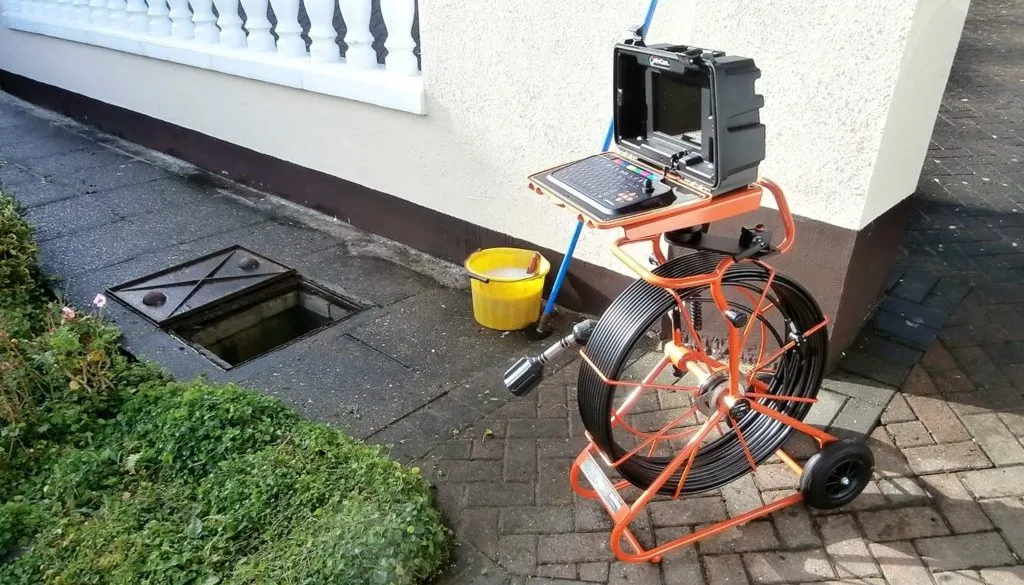
A CCTV camera survey of the drain run is the only reliable way to confirm what has happened underground without digging. It shows whether the pipe has cracked, displaced or fully collapsed, exactly where, and at what depth.
The engineer lifts the nearest chambers, clears any debris that has fallen into the pipe so the camera can pass, and records the run between them. The footage and a written report let you, your insurer and any contractor see the same fault rather than argue about it. Our CCTV drain survey service explains what the report includes. If the camera shows the drain is intact, that is useful too: it points the investigation at a water supply leak, a soakaway, or the ground itself.
Who is responsible for the repair
If the damaged section is a drain serving only your property and is within your boundary, the repair is yours. If it serves more than one property, or sits under the pavement or road, it is usually the water company's.
Holes in the public footway or road should be reported to the council's highways department, and suspected sewer collapses to the water company, which in most of London is Thames Water. Holes on private land are the owner's responsibility, though many buildings insurance policies cover accidental damage to drains, and some cover subsidence caused by a leaking drain. Photographs taken before anything is disturbed and the camera report are what an insurer will ask for. Our page on drainage insurance claims covers the evidence side.
Repair options once the fault is found
A fully collapsed section generally has to be excavated and replaced, and the void backfilled properly at the same time. A cracked or partly displaced pipe that still holds its shape can often be repaired from inside without digging.
Because a hole has already opened, excavation is often the practical answer here: the ground is already disturbed, the void needs filling and compacting properly, and the pipe below is frequently beyond lining. Where the pipe is still round and the void is small, relining the run and then reinstating the surface can be cheaper and less disruptive. Either way, the repair is quoted after the survey, not guessed at from the surface. The drain repair and excavation page sets out when digging is the right answer.
Frequently asked questions
Can I just fill in a hole over my drain?
Not until the cause is known. If a broken drain is washing soil away, the fill will sink again and the pipe will keep deteriorating underneath it. Fence the hole off, get a camera survey, and fill it properly as part of the repair.
Does home insurance cover a collapsed drain?
Many buildings policies cover accidental damage to drains, and some cover subsidence or heave caused by a leaking drain, but gradual wear and tear is often excluded. Check your policy wording, photograph the hole before anything is disturbed, and keep the CCTV report, because the insurer will want to see what caused the damage.
Is a hole near a manhole the water company's problem?
It depends on what the manhole serves. A chamber on a drain that only serves your property and sits within your boundary is yours. If it is on a shared run serving several properties, or on the public sewer, the water company is normally responsible. A camera survey or a sewer map from the water company will show which it is.