Drain Cleaning or Drain Unblocking: Which One Do You Actually Need?
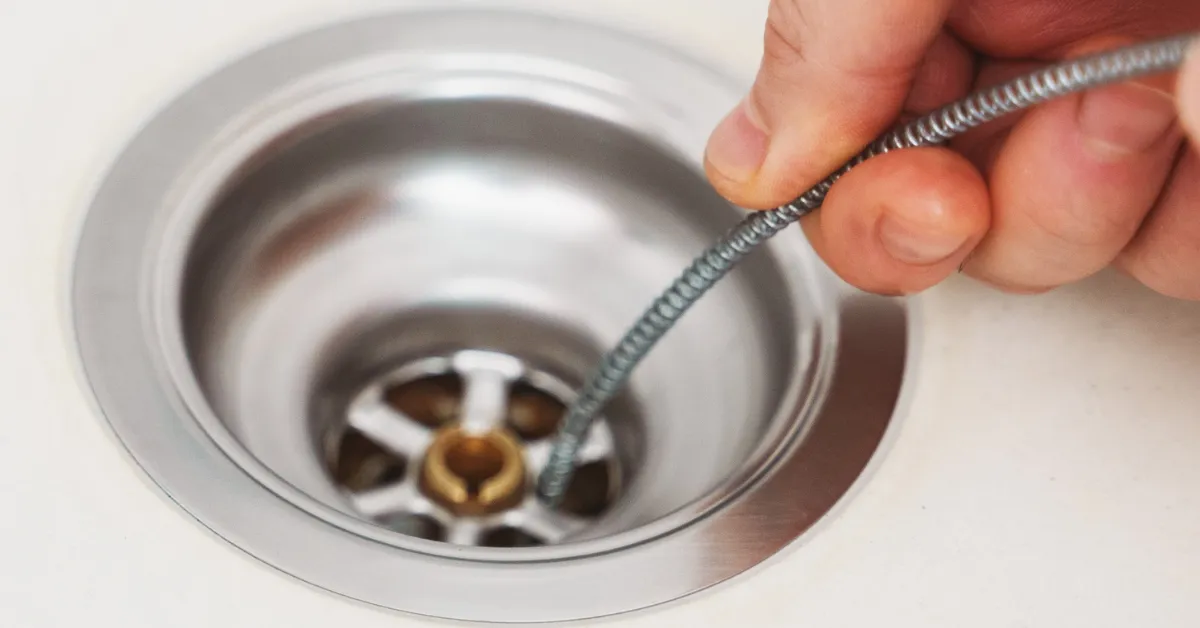
Unblocking and cleaning are different jobs with different urgency. How to tell which one your drain needs, why a cleared drain can block again within days, and when neither is the real answer.
Drain unblocking clears a blockage that has already stopped water flowing. Drain cleaning removes the grease, scale, silt or roots lining a pipe that still flows, so it does not block later. If water is standing, backing up or overflowing right now, you need unblocking, and it may not be able to wait. If the drain works but is slow, smelly or keeps blocking every few months, you need cleaning, and that is a job to book in normal working hours.
The difference in one sentence each
Unblocking restores flow by removing the one thing in the way. Cleaning restores the full bore of the pipe by removing what has built up along its length.
An unblock is aimed at a point: a wad of wipes at a bend, a nappy in the chamber, a clump of fat at a joint. The engineer finds it, breaks it up or pulls it out, and water runs again. A clean is aimed at a length of pipe: several metres of fat coating the walls of a kitchen drain, limescale narrowing an old cast iron stack, silt settled along a shallow run. The pipe was flowing before the clean and flows better after it.
The two often happen on the same visit. A good clearance does not stop the moment water starts running. It carries on until the run is clean enough that it will not block again next week, and it finishes with a camera check to confirm that.
Signs you need unblocking now
You need unblocking if water has nowhere to go. That means the problem is getting worse every time anyone in the building uses a tap or flushes.
- Toilet water rising to the rim, or not going down after a flush.
- Water coming up through a shower tray, a ground-floor toilet or an outside gully when something else drains.
- An inspection chamber in the garden or front path full of standing water or overflowing.
- Sewage, or water that smells of sewage, anywhere inside the property.
Not every one of those needs someone at 2am. If you have a second toilet and nothing is escaping into the house, it can usually wait until 7am. The quick checks in is a blocked drain an emergency help you decide in a couple of minutes.
Signs a drain needs cleaning, not an emergency visit
A drain needs cleaning when it still flows but is getting worse. These are the warnings that come weeks or months before a blockage.
- Sinks, showers or the bath draining more slowly than they used to, all at once.
- Gurgling from a toilet or plughole when another fitting empties.
- A drain smell that comes back within days of cleaning the traps.
- The same drain blocking every few months, especially a kitchen run.
- Fat or scum visible on the walls of the inspection chamber when you lift the cover.
None of these is an emergency. Book them for a weekday in the standard band, when the job costs less and there is time to do it properly.
How each job is done
Unblocking uses whatever reaches the blockage quickest. Cleaning almost always means high-pressure jetting along the whole run, followed by a camera.
For an unblock, the engineer might use drain rods from the inspection chamber, a hand or powered cable through an internal waste, or a jetting hose. Rods are quick and cheap on a soft blockage close to a chamber. For cleaning, a jetting unit sends a hose along the pipe with a nozzle that fires water backwards and outwards, scouring the walls as it is pulled back. Different nozzles cut through fat, break up scale or chop through fine roots. Our high-pressure drain jetting page covers the kit in more detail.
The camera matters for both. It is the only way to confirm that a run is actually clean rather than temporarily open, and the only way to see whether something structural caused the problem in the first place.
Why a cleared drain can block again within days
A drain that is unblocked but not cleaned often blocks again quickly. Rods can punch a hole through a mass of fat so that water runs, while most of the deposit stays stuck to the pipe.
The hole looks like a cleared drain. The water runs away, the engineer leaves, and within days the next lot of cooking fat and wipes catches on what is left. If you have paid for the same drain to be cleared twice in a month, that is usually why. Kitchen drains are the worst for it, and our guide to how fatbergs form explains the build-up behind it. Ask whoever clears the drain whether they jetted the full run and whether they checked it with a camera afterwards.
When cleaning is the wrong answer
Cleaning cannot fix a broken pipe. If a drain keeps blocking because of a cracked joint, a sag, roots growing through a joint or a partial collapse, jetting it every few months only treats the symptom.
If a camera shows a structural fault, the honest options are a repair or relining, or accepting regular jetting as a known cost. That is a decision to make in daylight with the footage in front of you, not at midnight on the doorstep.
The other wrong answer is a cleaning contract nobody needed. Most houses with sensible habits never need planned drain cleaning. Commercial kitchens, blocks of flats with shared runs, and older properties with a history of blockages are different, because the build-up is predictable. If you are being sold an annual clean for a house that has never had a drain problem, ask what the camera showed that makes it necessary.
What each costs, and why timing matters
We price by time band: 7am to 5pm, 5pm to midnight, and midnight to 7am. The figure for the band is agreed on the phone before anyone travels.
Cleaning is planned work, so there is rarely a reason to pay more than the standard band for it. Unblocking is sometimes urgent enough that the evening or night band is worth it, and sometimes not. Current figures for each band are on our pricing page. When you call, tell us whether water is still backing up or whether the drain is just slow, and we will tell you which job it is and whether it can wait.
Frequently asked questions
How often should household drains be cleaned?
Most houses never need planned drain cleaning if fat, wipes and cotton buds stay out of the drains. It is worth it where a drain has blocked more than once in a year, where a camera has shown fat or scale building up, or in older properties with a history of problems. In those cases a clean in normal working hours costs less than a blockage at night.
Is drain jetting the same as drain unblocking?
Not always. Jetting is one method, and it can be used to unblock a drain or to clean one. An unblock can also be done with rods or a cable. Jetting is the better choice for grease, silt and scale along a length of pipe, because rods tend to push a hole through the deposit rather than remove it.
Can I clean my own drains?
You can keep traps, gratings and gullies clean, and run hot water after washing up. Cleaning the underground pipe itself needs a jetting unit and a camera, and hiring a pressure washer with a drain attachment rarely reaches far enough to help. If a drain is slow everywhere at once, the build-up is below ground.