Cesspit, Septic Tank or Treatment Plant? How to Tell Which You Have and How Often to Empty It
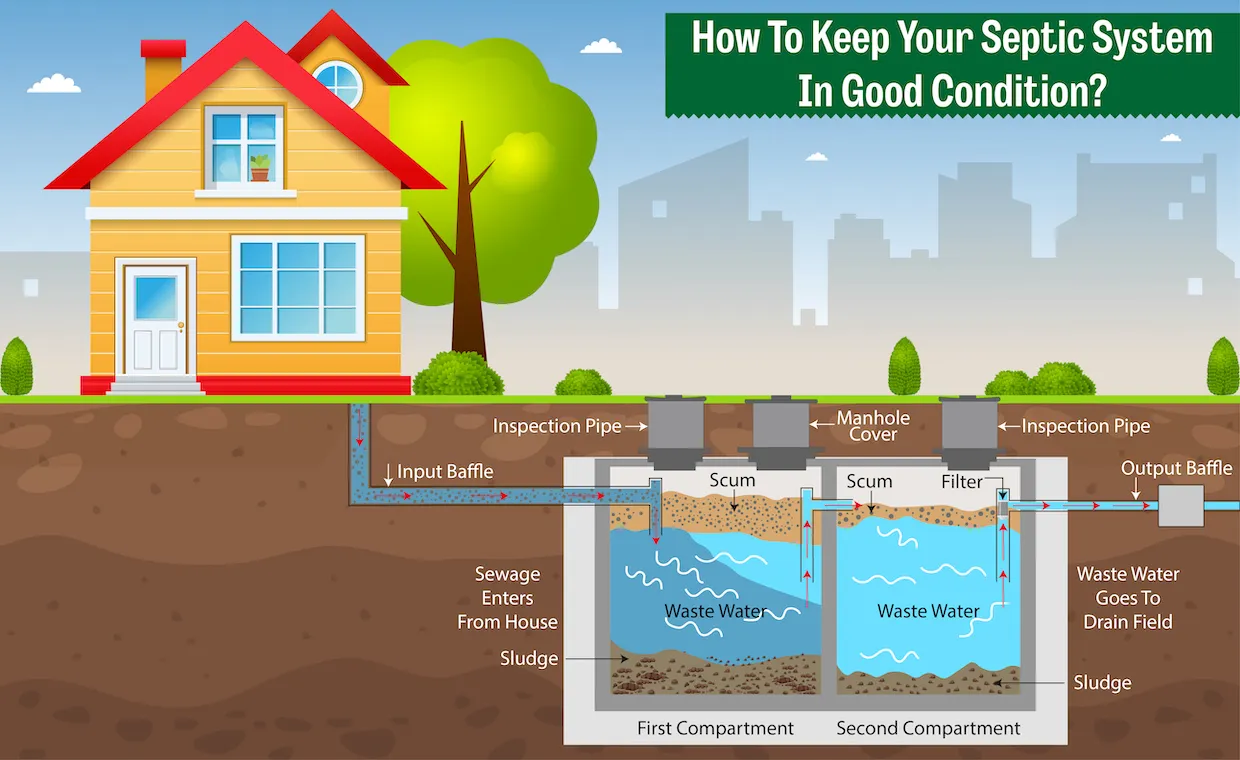
A cesspit stores everything and has to be emptied when full. A septic tank settles solids and lets liquid soak away, so it needs desludging rather than emptying as often. A treatment plant cleans the liquid mechanically. Knowing which you have tells you how often to book the tanker.
The three types of off-mains sewage tank differ in one way that matters for emptying: whether anything leaves the tank. A cesspit is sealed and holds everything, so it needs emptying whenever it is full, which for a household can mean every few weeks. A septic tank lets settled liquid flow out to the ground and only needs its sludge removed, usually around once a year. A sewage treatment plant cleans the liquid with air and bacteria and is also desludged periodically. Most of London is on mains sewers, but these tanks are still common on the outer edges, on older rural plots and on sites where the sewer never reached.
The one-line difference between the three
A cesspit stores, a septic tank settles, and a treatment plant treats. Everything else about how often it is emptied follows from that.
- Cesspit (cesspool). A sealed tank with an inlet and no outlet. All waste water stays in it until a tanker takes it away.
- Septic tank. Usually two chambers. Solids settle to the bottom as sludge, fats float as a crust, and the liquid in between flows out to a soakaway or drainage field in the ground.
- Sewage treatment plant. A tank with a pump or blower that adds air, so bacteria break down the waste more thoroughly. The cleaner liquid can go to a drainage field or, with the right permission, a watercourse.
How to tell which one is in your garden
Look for three things: an outlet pipe, an electrical supply and an alarm. A plant has power, a cesspit usually has an alarm and no outlet, and a septic tank has an outlet and no power.
A treatment plant nearly always has a humming blower or pump and a cable or small control box nearby, often with a warning light. A cesspit frequently has a high-level alarm, because running out of space is its main failure, and when you lift the cover there is only an inlet pipe. A septic tank has an inlet and an outlet at slightly different heights, and there will be a soakaway or drainage field somewhere downhill, sometimes visible as a strip of greener grass. If you are buying a property, the seller should be able to tell you what is installed and when it was last emptied; if they cannot, find out before you move in rather than when an alarm goes off.
How often a cesspit needs emptying
A cesspit needs emptying every time it fills, and how quickly that happens depends almost entirely on how much water the household uses. For a small household it is commonly every six to ten weeks.
You can estimate it yourself. Building Regulations guidance in England sets the minimum capacity of a new cesspool at 18,000 litres for two users, plus 6,800 litres for each additional user. A person in England uses somewhere around 140 to 150 litres of water a day, almost all of which ends up in the cesspit. Two people at 145 litres each fill 18,000 litres in a little over two months. A leaking toilet cistern or a downpipe connected by mistake can halve that, which is why a cesspit filling faster than usual is worth investigating rather than just emptying more often. Many owners book regular collections so they are never caught by an alarm; our septic tank and cesspit emptying service covers both scheduled and urgent visits.
How often a septic tank needs emptying
A septic tank is desludged rather than emptied to prevent overflowing, because the liquid leaves on its own. For most households that means roughly once a year, or as often as the manufacturer states.
The reason to desludge is to stop solids building up until they are carried out with the liquid into the soakaway, where they clog the ground and cause the kind of failure that is expensive to put right. The Environment Agency's guidance for England is to empty regularly and in line with the manufacturer's instructions, and for most domestic tanks that works out at about annually. Larger tanks with light use can go longer, but leaving it for several years on the assumption that nothing is wrong is how soakaways fail. Our septic tank maintenance checklist covers the day-to-day side.
How often a treatment plant needs emptying
A treatment plant needs desludging on the schedule its manufacturer sets, often every one to two years, plus servicing of the pump or blower. The service matters as much as the emptying.
Because a plant depends on air being pumped in, a failed blower turns it into a poorly performing septic tank without anyone noticing, other than a stronger smell. If the warning light is on or the humming has stopped, get it looked at even if the tank is not due to be emptied. When booking a desludge, mention that it is a treatment plant, because some models need part of the liquid left behind to keep the bacteria working.
The rules that apply in England
If you have a septic tank or treatment plant that discharges to the ground or a watercourse, the Environment Agency's general binding rules apply to you. Cesspits discharge nothing, so those rules are about emptying and not leaking.
The main points: a septic tank must not discharge directly to a river, stream or ditch, and those that did had to be replaced or upgraded from 2020, or sooner if the property was sold. The system must be emptied regularly and maintained so it works properly. Whoever takes the waste away must be a registered waste carrier, and you should get a waste transfer note each time. If you are unsure whether your system complies, the rules are published on GOV.UK, and a sale is the point at which it usually gets checked.
What to have ready when you book an emptying
Four details make the booking and the visit quicker: the type of tank, its rough size, the distance from where a tanker can park, and when it was last emptied.
Tanker hoses have a working reach, so a tank at the bottom of a long garden or behind a narrow side gate needs mentioning in advance. If an alarm is already sounding, say so; if it is a routine booking, a standard-hours slot costs less than an evening or night one, and the bands are on the pricing page.
Frequently asked questions
What is the difference between a cesspit and a septic tank?
A cesspit is sealed and stores all waste water until it is emptied, so it fills and needs a tanker regularly. A septic tank separates solids from liquid and lets the liquid drain into the ground, so it only needs the settled sludge removing, usually around once a year.
How often should a cesspit be emptied?
Whenever it is full, which depends on its size and how much water the household uses. As a guide, two people using around 145 litres each a day fill an 18,000 litre cesspit in a little over two months. Faster filling usually points to a leak or an unwanted connection.
Can you empty a septic tank too often?
Emptying more often than needed costs money without much benefit, and removing all the liquid from a treatment plant can slow its bacteria down. Follow the manufacturer's schedule, which for most domestic septic tanks is about once a year.